
Gaining
Gaining weight coincides most effectively with resistance training as the stimulation for muscle growth is most optimal.
To gain weight you must be in a positive energy balance where your total daily energy intake (total calories consumed) surpasses your total daily energy expenditure (total calories burned). It is recommended that you should increase your calorie intake by ~20% (Bean, 2017).
Key Points:
- Increase daily calorie intake by ~500 kcal.
- Protein intake should be between 1.7-1.9 g/kg body weight.
- Carbohydrates should make up 60% of daily calorie intake.
- After training, consume carbs combined with protein in a ratio of 4:1.
- Increase meal frequency – eat nutritious snacks more often.
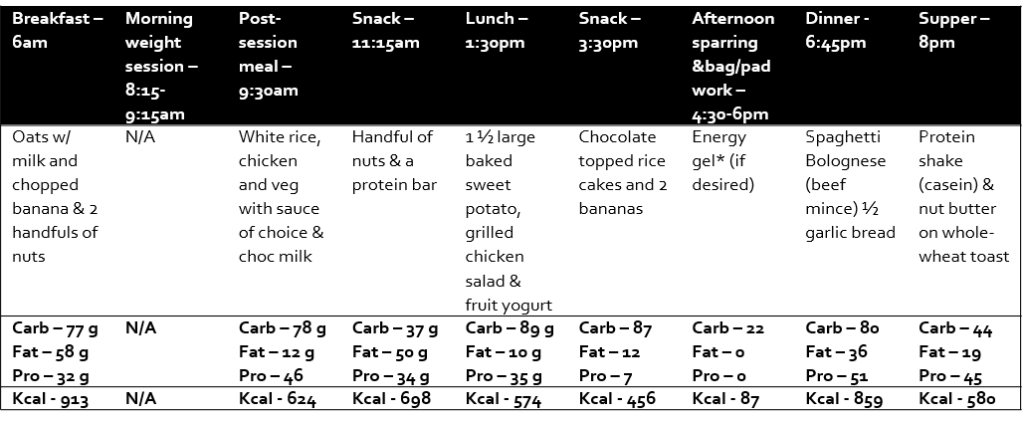
Here is an example of a day-diet plan on a moderate intensity training day…
Cutting
When aiming to drop weight for competition, lots of planning and consideration need to be in place to ensure that weight loss is achieved effectively and most importantly, safely!
In order to achieve weight loss, total daily energy intake needs to be lower than total daily energy expenditure; this is called a negative energy balance. Therefore, this can vary from day to day dependent on what type and how much training you have that day. It is recommended that a reduction of no more than 15% in daily calories is effective in achieving weight loss (Bean, 2017).
Being in a negative energy balance can have negative effects on performance in training. When attempting to achieve weight loss, the diet does not provide enough carbs to support high intensity training or numerous sessions, resulting in depleted glycogen stores and increasing the rate at which fatigue sets in. There are, however, nutritional methods to get around this issue if you are really struggling with the intensity of the session. An energy gel along with some water is an effective method of gaining some much-needed energy to help you through the session.
Key Points:
- Carbs should make up 60% of daily calorie intake.
- Protein intake should be around 1.6 g/kg body weight.
- Low GI carbs should be the main staple within meals.
- Minimise consumption of saturated fats whilst maintaining essential fatty acids.
Here is an example of a day-diet plan on a moderate intensity training day…

Below is a table providing you with alternative, healthy snack ideas from each macronutrient group.

References:
Bean, A. (2017). The Complete Guide to Sports Nutrition. 8th ed. London: Bloomsbury, p.58-78.
 SiB
SiB 