
Competition
24 hours before competition
This stage is essential for replenishing muscle and liver glycogen stores that are depleted when ‘making weight’ for the weigh-in. This can be achieved through a carbohydrate load where your carb intake surpasses the average daily recommended intake to increase glycogen availability. Low GI carbs are to be of priority here to properly ensure that glycogen stores are fully replenished and blood sugar levels don’t spike.
Throughout the 24-hour period, these high carb meals should contain around 12g of carbs per 1kg of bodyweight and should be consumed at 2-3hr intervals up until the 3-hour mark prior to the competition.
Below is an example of a low GI, high carb meal to be eaten throughout the day…
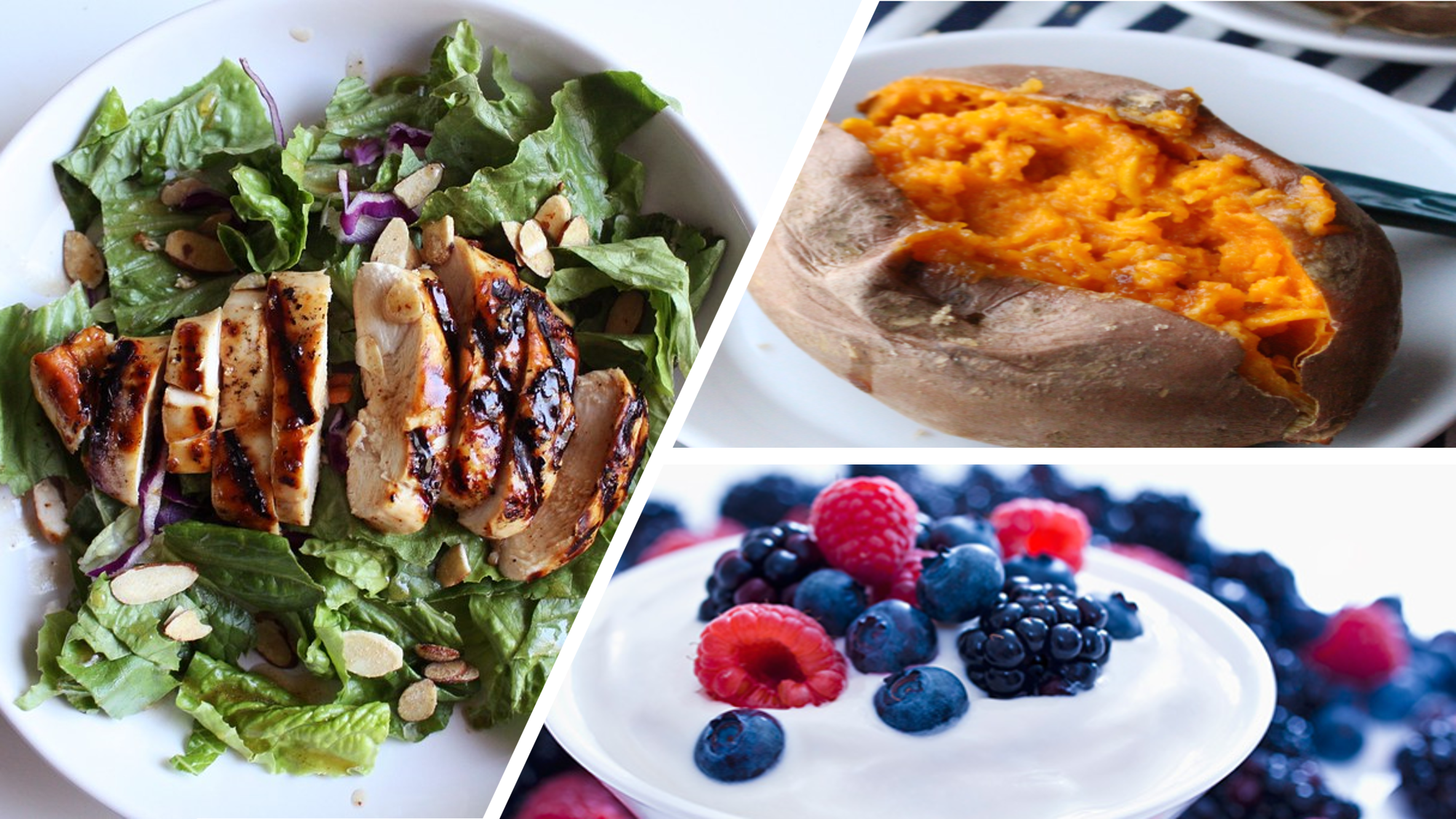
Carbs – 75g Fat – 10g Protein – 33g
< 3 hours before competition
This final stage is the last chance to try and further boost glycogen stores. However, careful consideration into what you consume does need to take place. Major discomfort may come about if too much food or even the wrong type of food is consumed. The right amount of food will allow for proper digestion and not leave you with a sensation of being too full. High GI carbs will be more beneficial to performance here as they are more easily digestible than low GI carbs, they also provide a spike in blood sugar levels, meaning the glycogen reaches the muscles quicker!
Below is an example of different snacks containing high GI carbs suitable for pre-competition…

Training
Before training
Consuming the right type and correct amount of foods is essential in fuelling the training sessions you have planned. Here you will be provided with some examples of what and how much you should be eating prior to different training sessions.
Light cardio & weight training – When performing these types of training, the stress is placed predominantly on the fat oxidative functions of the muscles; where fat is used as the fuel for exercise rather that muscle glycogen (carbohydrates). Because of this lack of glycogen depletion in the muscles, it is recommended that a low carbohydrate meal is consumed prior to this training (<20g carbs). The optimal time for consumption prior to cardio has been suggested to be ~3 hours (Wu & Williams, 2006), whereas for weight training, it can vary between 3-1 hours, however, the closer it gets to the session, it is advised that the meal size should decrease to avoid any feelings of discomfort during exercise (Bean, 2017).
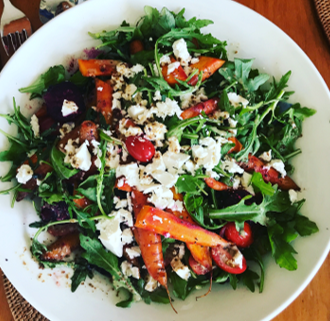
Carbs – 3g Fats – 16g Protein – 3g
Light sparring & bag/pad work – The combination of medium intensity and duration of boxing training will predominantly utilise the glycogen stored in the muscles. To ensure that the muscles are stored with glycogen and don’t deplete throughout the session, it is recommended consuming between 20-40g of low GI carbs ~3 hours prior to training (Maffucci & McMurray, 2000).
HIIT/SIT & sparring – Due to the extremely high intensity and repeated bouts of this type of training, muscle and liver glycogen stores are to be depleted very quickly. If carbohydrate intake is insufficient prior to training, then it can result it quicker time to fatigue and less overall power output during the session, which can affect the efficiency of the training (Zajac et al., 2014). Therefore, a high carb low GI meal (40-60g) is recommended ~3 hours prior to training. High GI foods are good to consume ~1 hour prior to training for a quicker release of energy.
After training
Adequate nutrient intake after training sessions is essential in aiding recovery. Failure to properly recover after training can lead to lower levels of energy for the subsequent session that day and can negatively affect your performance.
Light cardio & weight training – With consideration to low intensity cardio training and its utilisation of fat oxidation, a low carb meal consumed ~2-3 hours post exercise will be most beneficial for the athlete as it will increase the rate of fat oxidation (Bean, 2017). On the other hand, after weight training, emphasis is to be placed on protein intake to aid with protein synthesis (repairing of muscles) following the breakdown of proteins, and results in less muscle damage (Berardi, Noreen & Lemon, 2008). Optimal protein intake is suggested to be 0.25 g/kg of bodyweight, for example, an athlete weighing 80kg would need 20 g of protein post exercise (Phillips & Van Loon, 2011).
Sparring, bag/pad work and HIIT/SIT – All of these training methods are highly likely to deplete muscle and liver glycogen stores and cause slight muscle damage due to the nature of the high intensity repeated bouts. During the first 2 hours post training, it is more beneficial to consume carbs with a high GI content, as this increases glycogen replenishment quicker than what a low GI meal would do. It has also been shown that greater speeds of glycogen recovery are associated with the combination of a small amount of protein and carbohydrates (Beelen, Burke, Gibala & van Loon, 2010).
References:
Bean, A. (2017). The Complete Guide to Sports Nutrition. 8th ed. London: Bloomsbury, p.58-78.
Beelen, M., Burke, L., Gibala, M., & van Loon, L. (2010). Nutritional Strategies to Promote Postexercise Recovery. International Journal Of Sport Nutrition And Exercise Metabolism, 20(6), 515-532. doi: 10.1123/ijsnem.20.6.515
Berardi, J., Noreen, E., & Lemon, P. (2008). Recovery from a cycling time trial is enhanced with carbohydrate-protein supplementation vs. isoenergetic carbohydrate supplementation. Journal Of The International Society Of Sports Nutrition, 5(1). doi: 10.1186/1550-2783-5-24
Maffucci, D., & McMurray, R. (2000). Towards Optimizing the Timing of the Pre-Exercise Meal. International Journal Of Sport Nutrition And Exercise Metabolism, 10(2), 103-113. doi: 10.1123/ijsnem.10.2.103
Phillips, S., & Van Loon, L. (2011). Dietary protein for athletes: From requirements to optimum adaptation. Journal Of Sports Sciences, 29(sup1), S29-S38. doi: 10.1080/02640414.2011.619204
Wu, C., & Williams, C. (2006). A Low Glycemic Index Meal before Exercise Improves Endurance Running Capacity in Men. International Journal Of Sport Nutrition And Exercise Metabolism, 16(5), 510-527. doi: 10.1123/ijsnem.16.5.510
Zajac, A., Poprzecki, S., Maszczyk, A., Czuba, M., Michalczyk, M., & Zydek, G. (2014). The Effects of a Ketogenic Diet on Exercise Metabolism and Physical Performance in Off-Road Cyclists. Nutrients, 6(7), 2493-2508. doi: 10.3390/nu6072493
 SiB
SiB 